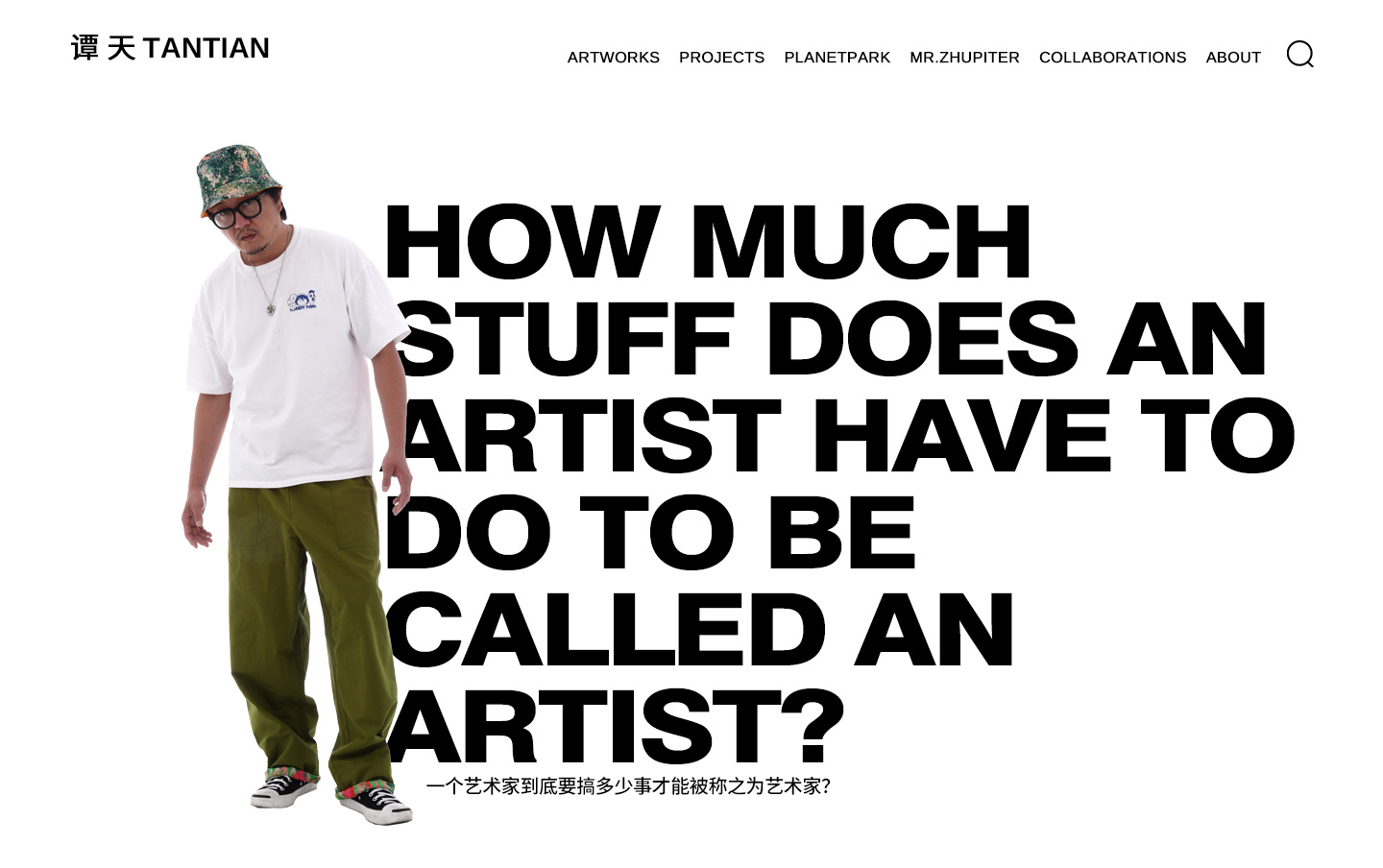



谭天戴迷彩帽、眼镜、白 T 恤和绿色工装裤,站在白底上。
HOW MUCH STUFF DOES AN ARTIST HAVE TO DO TO BE CALLED AN ARTIST?
一个艺术家到底要搞多少事才能被称之为艺术家?
一个艺术家到底要搞多少事
才能被称之为艺术家?
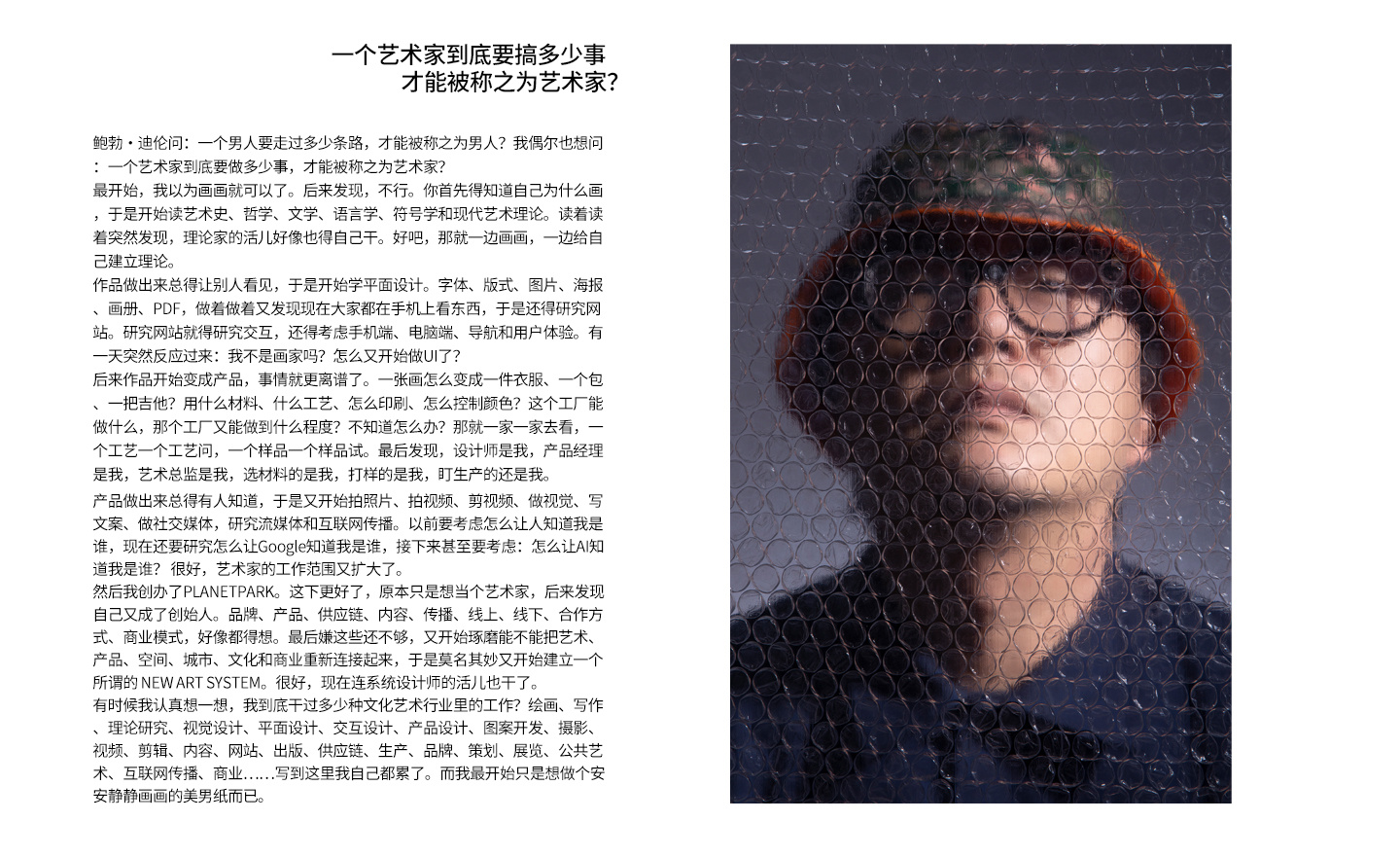
谭天戴迷彩帽和眼镜,隔着一层圆孔网看向镜头。
鲍勃·迪伦问:一个男人要走过多少条路,才能被称之为男人?我偶尔也想问:一个艺术家到底要做多少事,才能被称之为艺术家?
最开始,我以为画画就可以了。后来发现,不行。你首先得知道自己为什么画,于是开始读艺术史、哲学、文学、语言学、符号学和现代艺术理论。读着读着突然发现,理论家的活儿好像也得自己干。好吧,那就一边画画,一边给自己建立理论。
作品做出来总得让别人看见,于是开始学平面设计。字体、版式、图片、海报、画册、PDF,做着做着又发现现在大家都在手机上看东西,于是还得研究网站。研究网站就得研究交互,还得考虑手机端、电脑端、导航和用户体验。有一天突然反应过来:我不是画家吗?怎么又开始做UI了?
后来作品开始变成产品,事情就更离谱了。一张画怎么变成一件衣服、一个包、一把吉他?用什么材料、什么工艺、怎么印刷、怎么控制颜色?这个工厂能做什么,那个工厂又能做到什么程度?不知道怎么办?那就一家一家去看,一个工艺一个工艺问,一个样品一个样品试。最后发现,设计师是我,产品经理是我,艺术总监是我,选材料的是我,打样的是我,盯生产的还是我。
产品做出来总得有人知道,于是又开始拍照片、拍视频、剪视频、做视觉、写文案、做社交媒体,研究流媒体和互联网传播。以前要考虑怎么让人知道我是谁,现在还要研究怎么让Google知道我是谁,接下来甚至要考虑:怎么让AI知道我是谁? 很好,艺术家的工作范围又扩大了。
然后我创办了PLANETPARK。这下更好了,原本只是想当个艺术家,后来发现自己又成了创始人。品牌、产品、供应链、内容、传播、线上、线下、合作方式、商业模式,好像都得想。最后嫌这些还不够,又开始琢磨能不能把艺术、产品、空间、城市、文化和商业重新连接起来,于是莫名其妙又开始建立一个所谓的 NEW ART SYSTEM。很好,现在连系统设计师的活儿也干了。
有时候我认真想一想,我到底干过多少种文化艺术行业里的工作?绘画、写作、理论研究、视觉设计、平面设计、交互设计、产品设计、图案开发、摄影、视频、剪辑、内容、网站、出版、供应链、生产、品牌、策划、展览、公共艺术、互联网传播、商业……写到这里我自己都累了。而我最开始只是想做个安安静静画画的美男纸而已。
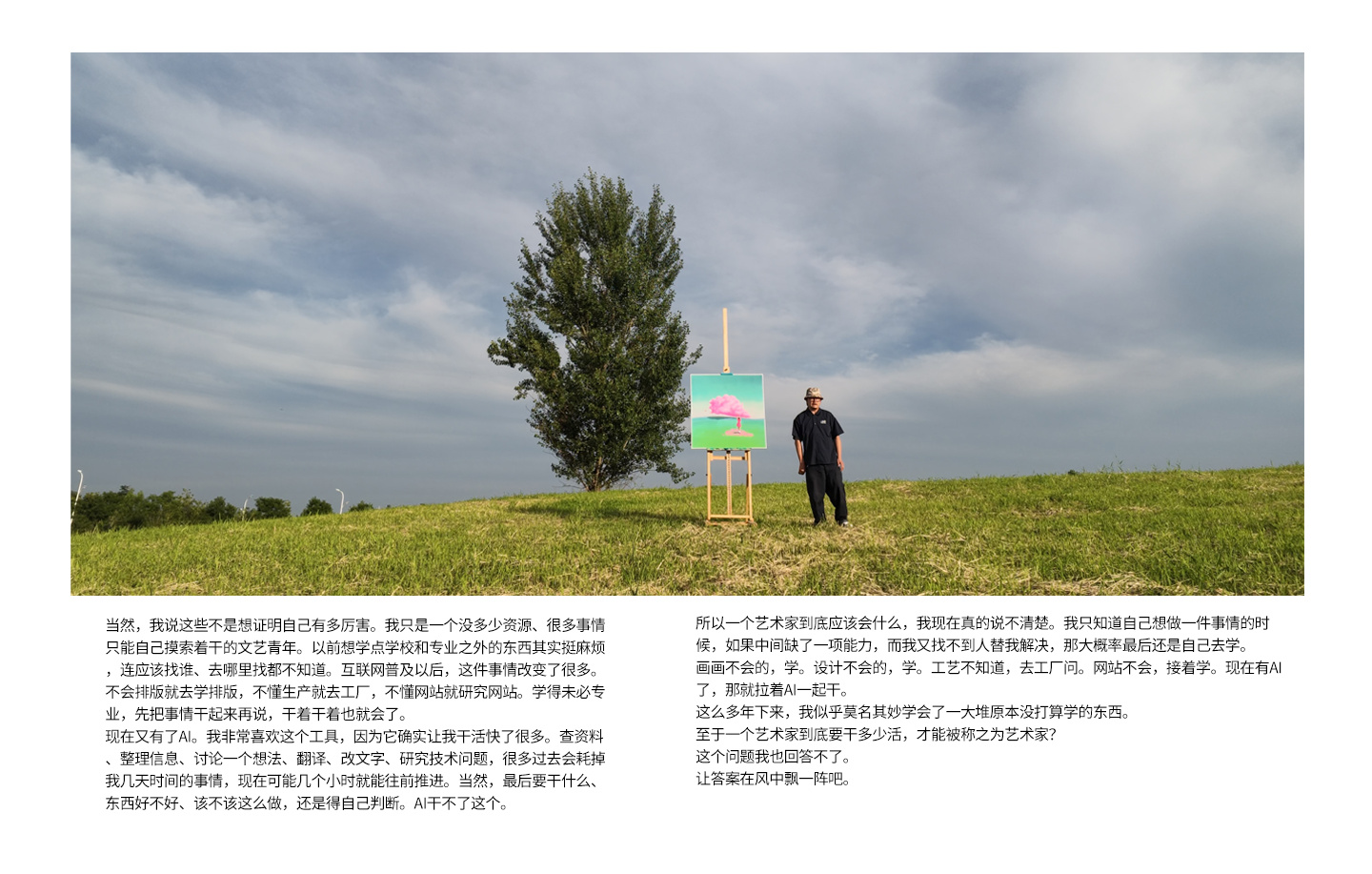
谭天站在草地里,身旁的画架上立着一幅画,后面是一棵树和阴天。
当然,我说这些不是想证明自己有多厉害。我只是一个没多少资源、很多事情只能自己摸索着干的文艺青年。以前想学点学校和专业之外的东西其实挺麻烦,连应该找谁、去哪里找都不知道。互联网普及以后,这件事情改变了很多。不会排版就去学排版,不懂生产就去工厂,不懂网站就研究网站。学得未必专业,先把事情干起来再说,干着干着也就会了。
现在又有了AI。我非常喜欢这个工具,因为它确实让我干活快了很多。查资料、整理信息、讨论一个想法、翻译、改文字、研究技术问题,很多过去会耗掉我几天时间的事情,现在可能几个小时就能往前推进。当然,最后要干什么、东西好不好、该不该这么做,还是得自己判断。AI干不了这个。
所以一个艺术家到底应该会什么,我现在真的说不清楚。我只知道自己想做一件事情的时候,如果中间缺了一项能力,而我又找不到人替我解决,那大概率最后还是自己去学。
画画不会的,学。设计不会的,学。工艺不知道,去工厂问。网站不会,接着学。现在有AI了,那就拉着AI一起干。
这么多年下来,我似乎莫名其妙学会了一大堆原本没打算学的东西。
至于一个艺术家到底要干多少活,才能被称之为艺术家?
这个问题我也回答不了。
让答案在风中飘一阵吧。
HOW MUCH STUFF DOES AN ARTIST HAVE TO DO TO BE CALLED AN ARTIST?
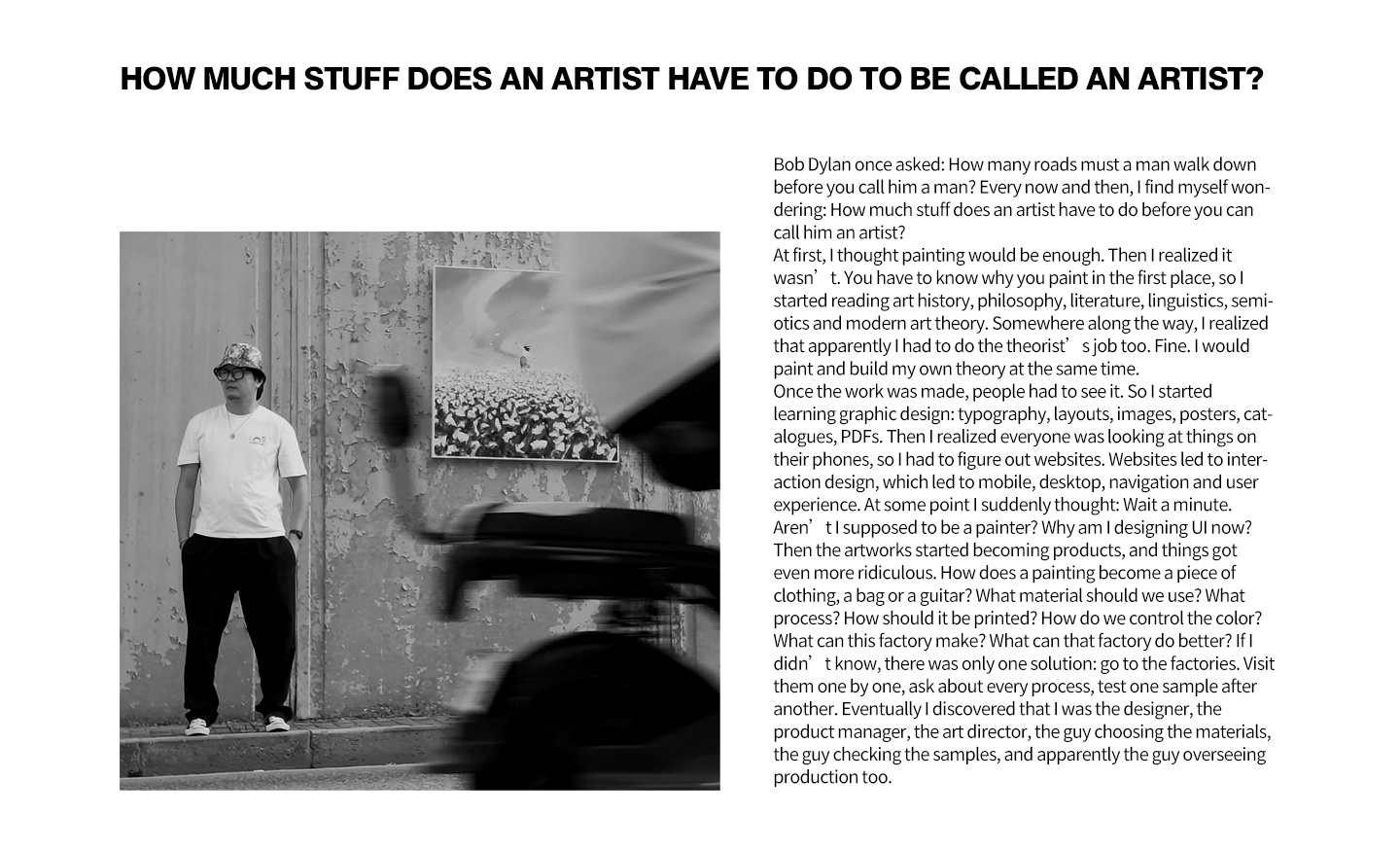
黑白照片里,谭天靠着斑驳的墙,旁边是一幅画面,前景有车驶过。
Bob Dylan once asked: How many roads must a man walk down before you call him a man? Every now and then, I find myself wondering: How much stuff does an artist have to do before you can call him an artist?
At first, I thought painting would be enough. Then I realized it wasn’t. You have to know why you paint in the first place, so I started reading art history, philosophy, literature, linguistics, semiotics and modern art theory. Somewhere along the way, I realized that apparently I had to do the theorist’s job too. Fine. I would paint and build my own theory at the same time.
Once the work was made, people had to see it. So I started learning graphic design: typography, layouts, images, posters, catalogues, PDFs. Then I realized everyone was looking at things on their phones, so I had to figure out websites. Websites led to interaction design, which led to mobile, desktop, navigation and user experience. At some point I suddenly thought: Wait a minute. Aren’t I supposed to be a painter? Why am I designing UI now?
Then the artworks started becoming products, and things got even more ridiculous. How does a painting become a piece of clothing, a bag or a guitar? What material should we use? What process? How should it be printed? How do we control the color? What can this factory make? What can that factory do better? If I didn’t know, there was only one solution: go to the factories. Visit them one by one, ask about every process, test one sample after another. Eventually I discovered that I was the designer, the product manager, the art director, the guy choosing the materials, the guy checking the samples, and apparently the guy overseeing production too.
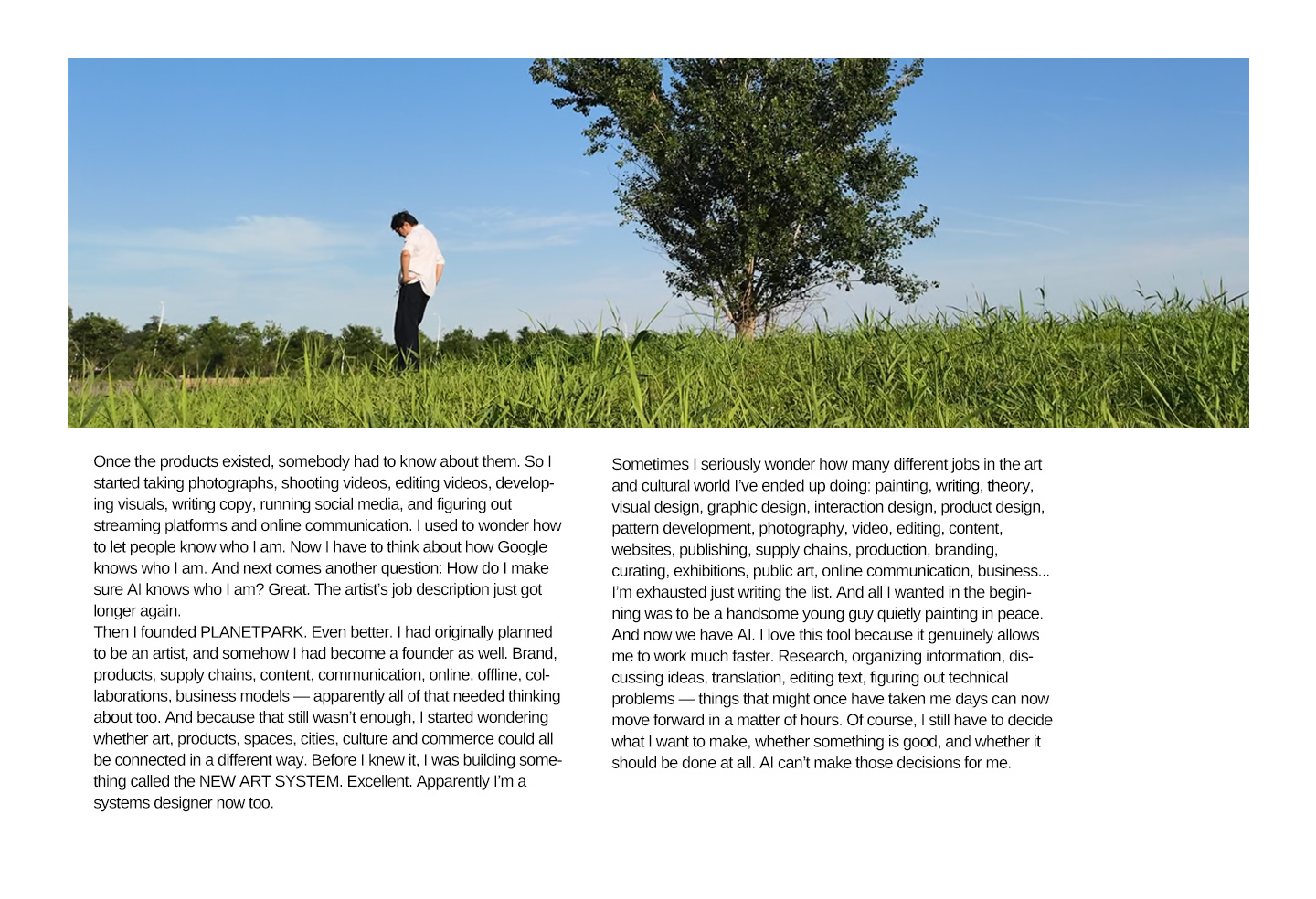
谭天走在草地里,旁边是一棵大树和蓝天。
Once the products existed, somebody had to know about them. So I started taking photographs, shooting videos, editing videos, developing visuals, writing copy, running social media, and figuring out streaming platforms and online communication. I used to wonder how to let people know who I am. Now I have to think about how Google knows who I am. And next comes another question: How do I make sure AI knows who I am? Great. The artist’s job description just got longer again.
Then I founded PLANETPARK. Even better. I had originally planned to be an artist, and somehow I had become a founder as well. Brand, products, supply chains, content, communication, online, offline, collaborations, business models — apparently all of that needed thinking about too. And because that still wasn’t enough, I started wondering whether art, products, spaces, cities, culture and commerce could all be connected in a different way. Before I knew it, I was building something called the NEW ART SYSTEM. Excellent. Apparently I’m a systems designer now too.
Sometimes I seriously wonder how many different jobs in the art and cultural world I’ve ended up doing: painting, writing, theory, visual design, graphic design, interaction design, product design, pattern development, photography, video, editing, content, websites, publishing, supply chains, production, branding, curating, exhibitions, public art, online communication, business... I’m exhausted just writing the list. And all I wanted in the beginning was to be a handsome young guy quietly painting in peace.
And now we have AI. I love this tool because it genuinely allows me to work much faster. Research, organizing information, discussing ideas, translation, editing text, figuring out technical problems — things that might once have taken me days can now move forward in a matter of hours. Of course, I still have to decide what I want to make, whether something is good, and whether it should be done at all. AI can’t make those decisions for me.
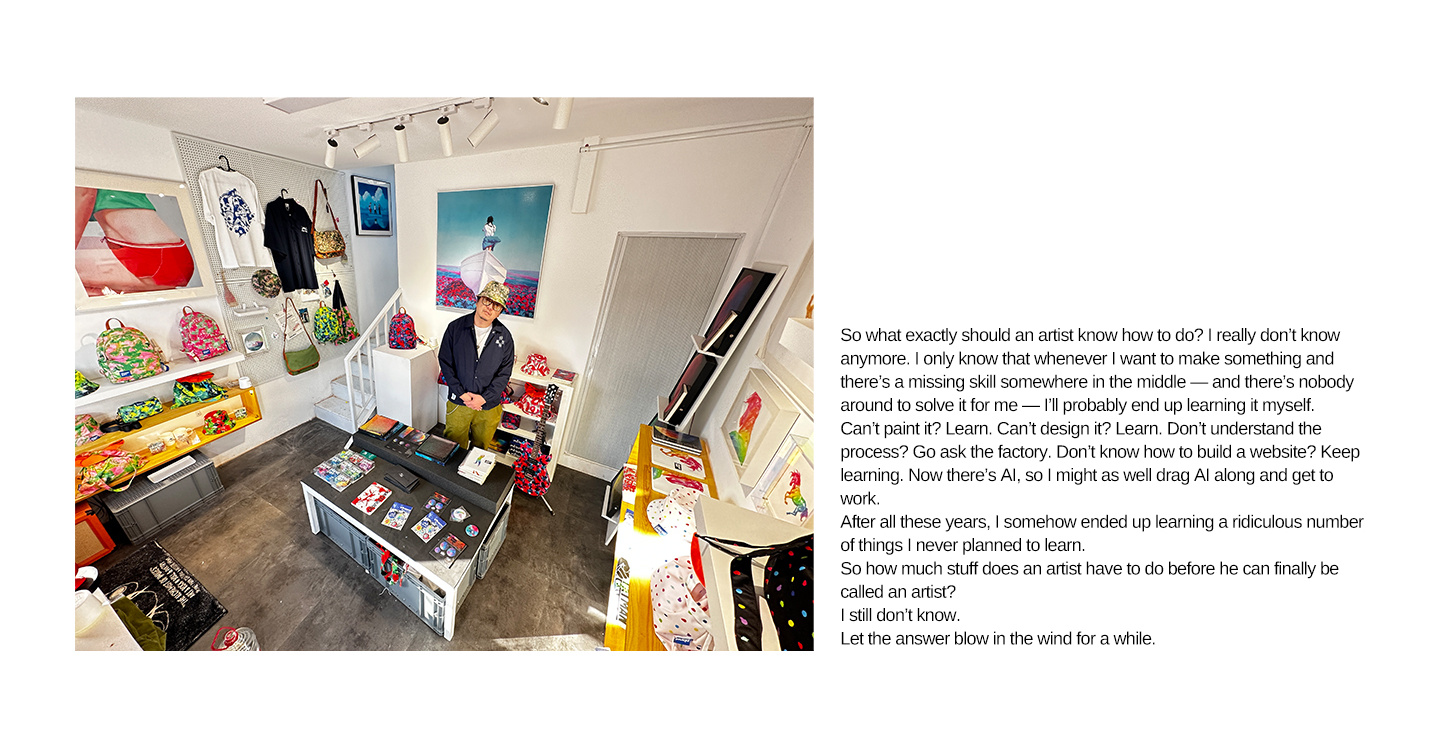
谭天站在摆满衣服、包和画的店铺里。
So what exactly should an artist know how to do? I really don’t know anymore. I only know that whenever I want to make something and there’s a missing skill somewhere in the middle — and there’s nobody around to solve it for me — I’ll probably end up learning it myself.
Can’t paint it? Learn. Can’t design it? Learn. Don’t understand the process? Go ask the factory. Don’t know how to build a website? Keep learning. Now there’s AI, so I might as well drag AI along and get to work.
After all these years, I somehow ended up learning a ridiculous number of things I never planned to learn.
So how much stuff does an artist have to do before he can finally be called an artist?
I still don’t know.
Let the answer blow in the wind for a while.
版权所有:行星文化(苏州)有限公司苏ICP备2021005664号-1